
Karate Classes in Mississauga
Your first class is free. Wear loose clothes, and we’ll guide you through it.
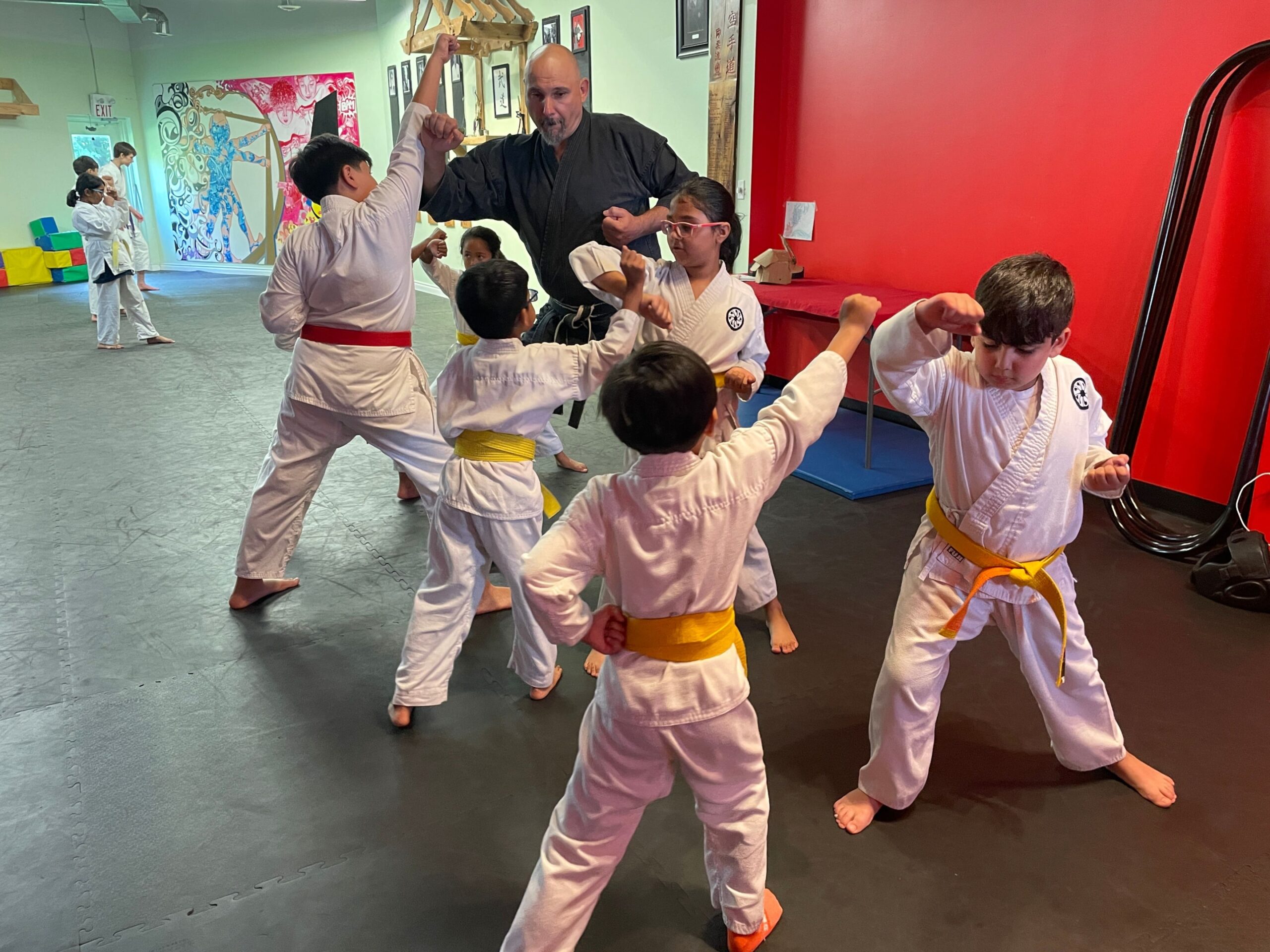
Learn Karate-do, self-defence-based karate in the Goju Ryu style, in classes for ages 4 to adult. You learn stand-up, empty-hand striking with punches and kicks, along with blocks, grabs, holds, controls and takedowns.
You learn self-defence and new skills, and build confidence, discipline and fitness, in a class for your own age group: 4–7, 8–12, teens or adults.
Karate-do at a glance
- Ages: 4 to adult, in classes for 4–7, 8–12, 13–17 and 18 and up
- Style: Goju Ryu, hard-soft style
- Class length: 45–50 minutes for ages 4–12; 60 minutes for teens and adults
- How often: plan on two classes a week (see the class schedule)
- Start: any time; no required start date
- Experience: none needed
- First rank: about three months of consistent training
- Private lessons: also available (Private Lessons)
- Where: 8-1010 Dream Crest Rd, Mississauga
What you train
Strikes and blocks
Punches, kicks and blocks, on their own, on pads and with a partner.
Patterns (kata) and applications (bunkai)
Patterns that grow at each level, learned move by move, and their corresponding applications.
Takedowns and throws
Takedowns, throws and controls, built up as you move up in rank.
Grab escapes
How to get free from grabs, holds and headlocks.
Partner drills
Most training is done with a partner: you train with each other, not against each other.
Strength and fitness
Warm-ups and exercises that build strength, flexibility and balance, and grow with each level.
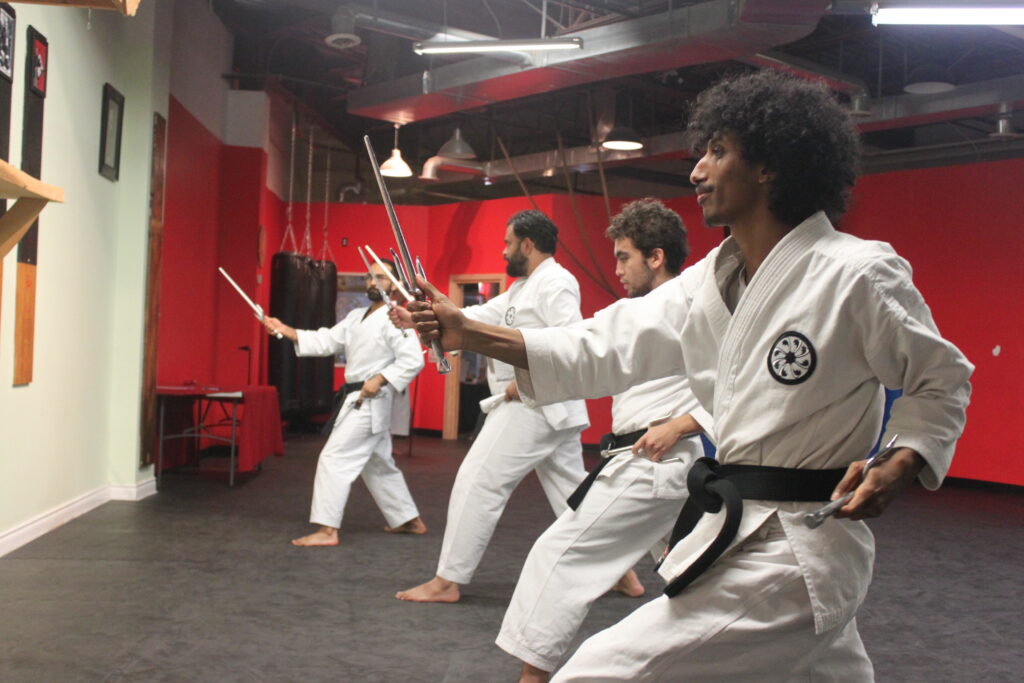
Kobudo
Kobudo, Okinawan weapons training, is taught within Karate-do at higher ranks.
Self-defence, standing up
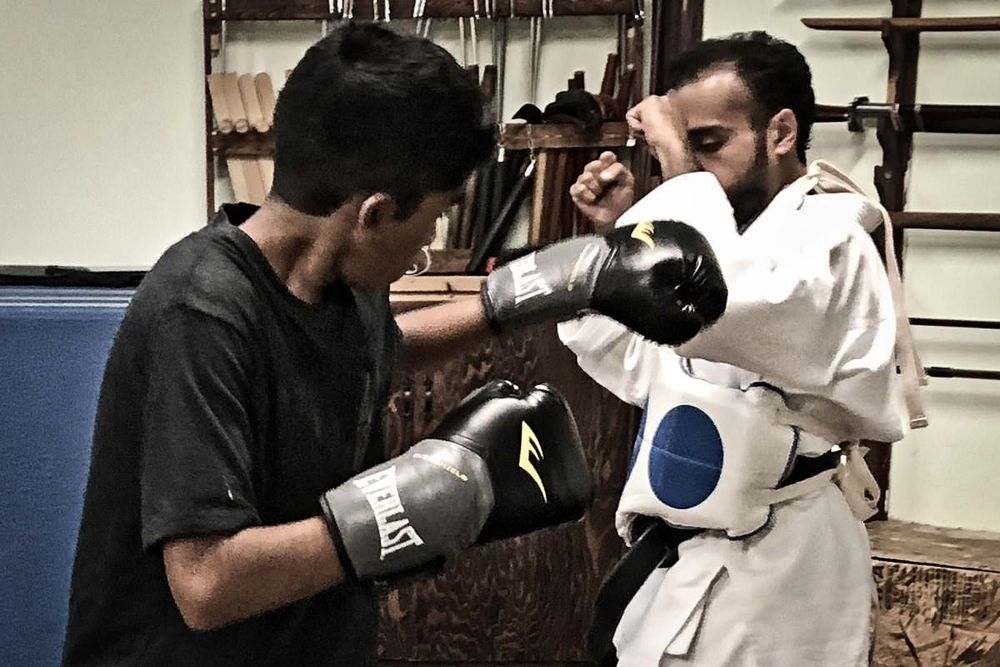
Karate-do is stand-up striking with punches and kicks, plus blocks, controls and takedowns, and our style also uses grabs and holds. It is what most people picture when they think of self-defence: you start empty-handed and standing up. Most beginners start with karate, because you begin at a distance from your partner and without a weapon.
We teach Goju Ryu, meaning hard-soft, a traditional Okinawan karate style.
Ranks and black belt
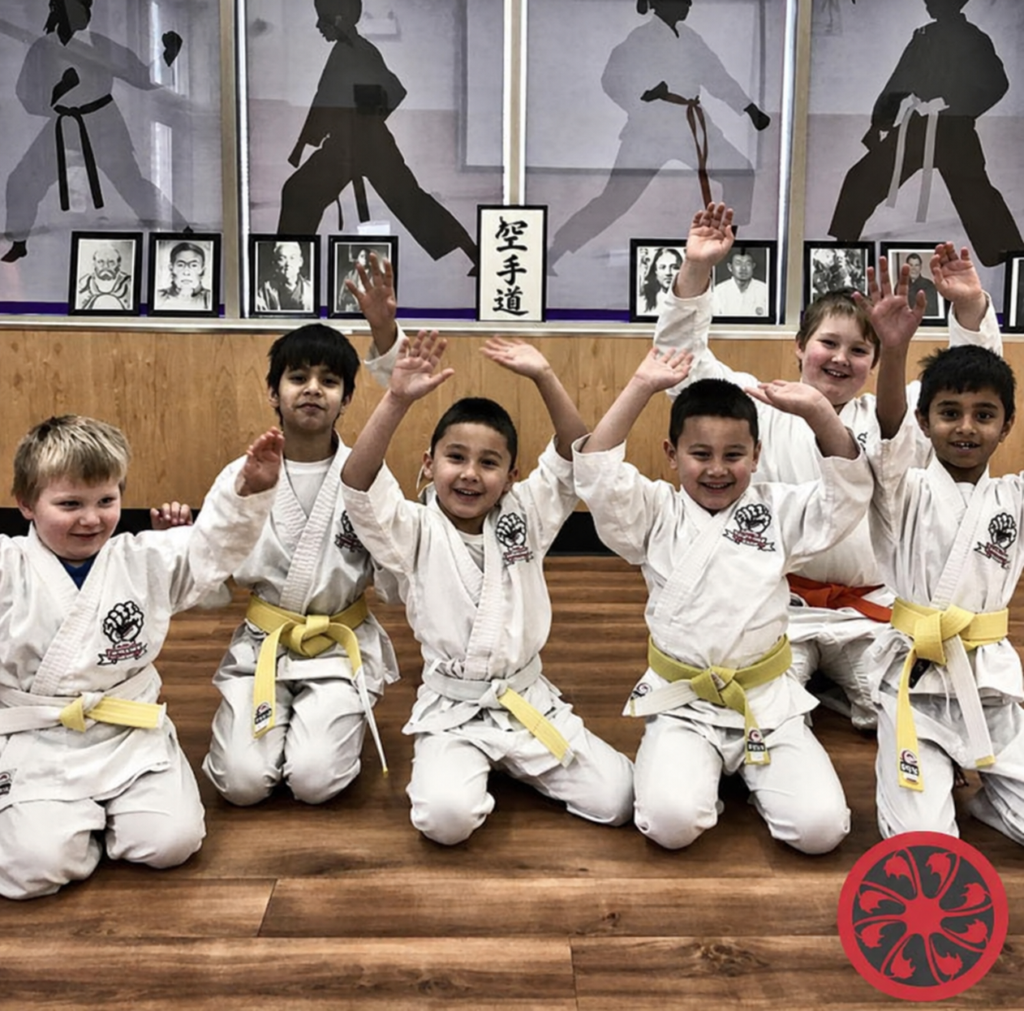
We can’t give you a belt. Only your own work can. Each rank is earned through consistent training, and the first comes after about three months. Gradings test your skills under pressure, with the dojo community there in support.
Black belt is reserved for students 18 and older, and an adult training consistently reaches it in about four years. Nearly all our instructors started here as students. Meet our instructors
Starting as a beginner
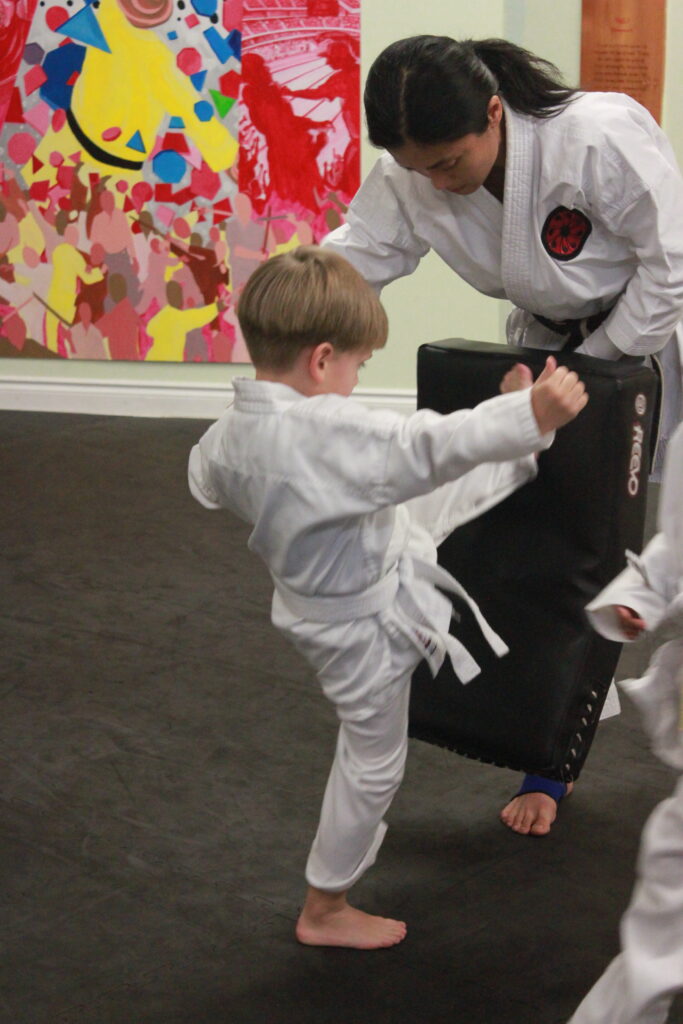
Most people start with no experience. On day one, an instructor or senior student partners with you and teaches you the first steps, and from then on you learn step by step.
You can start any time; there is no required start date. New students start all through the month, so you won’t be the only beginner in the class.
Self-defence in every class
Like every program here, Karate-do is taught as self-defence, and it starts before anyone throws a punch.
The best self-defence is no self-defence
We teach that physical fighting is the last resort, and that your words, courtesy, patience and respect can stop a fight before it even begins.
Believe you are worth defending
We ask everyone: are you worth defending? You have to first believe that you are worth defending. Following that belief comes the action to back it up.
Read body language
You learn to read body language, and what your own posture and the way you carry yourself project.
Use your voice
We address the use of voice in many forms: from speaking up for yourself, especially against someone you know, up to using a louder voice to protect yourself and get attention for help.
Find the courage to fight for yourself
The classes help build up your courage to fight for yourself, be it a simple “I’m not comfortable with that” to someone you already know, to a loud “NO” to a stranger.
Karate-do at every age
Children train with their own age group, 4–7, 8–12 or 13–17, because each age has its own needs and its own self-defence skills.
Ages 4–7
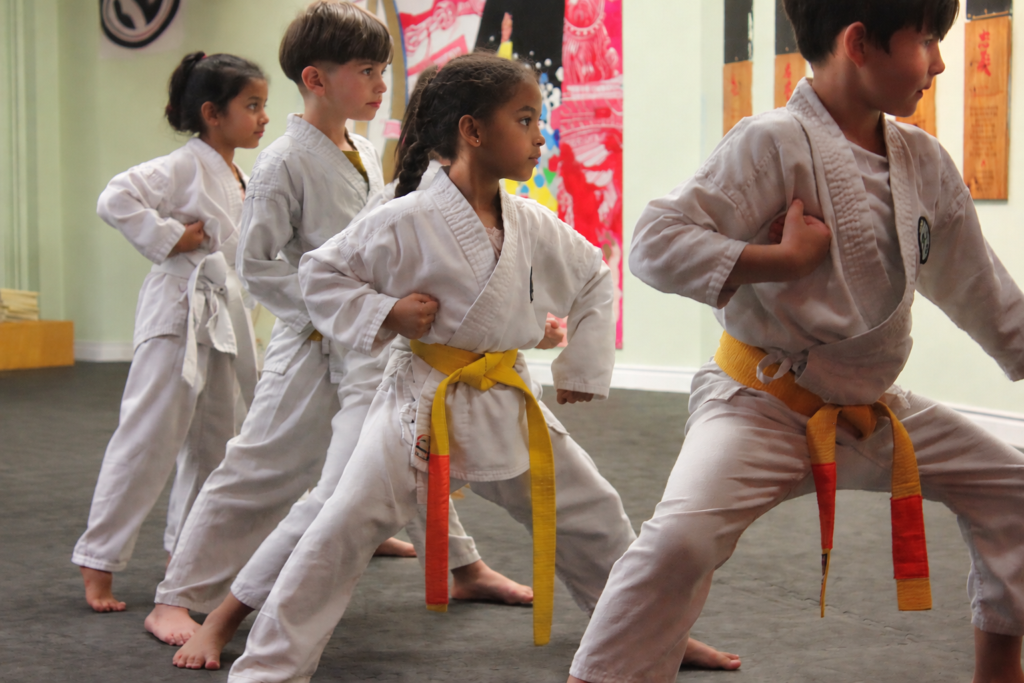
Punches, kicks and blocks, patterns (kata) learned move by move, and how to get free when someone grabs. Your child also learns to use their voice to get help.
Ages 8–12
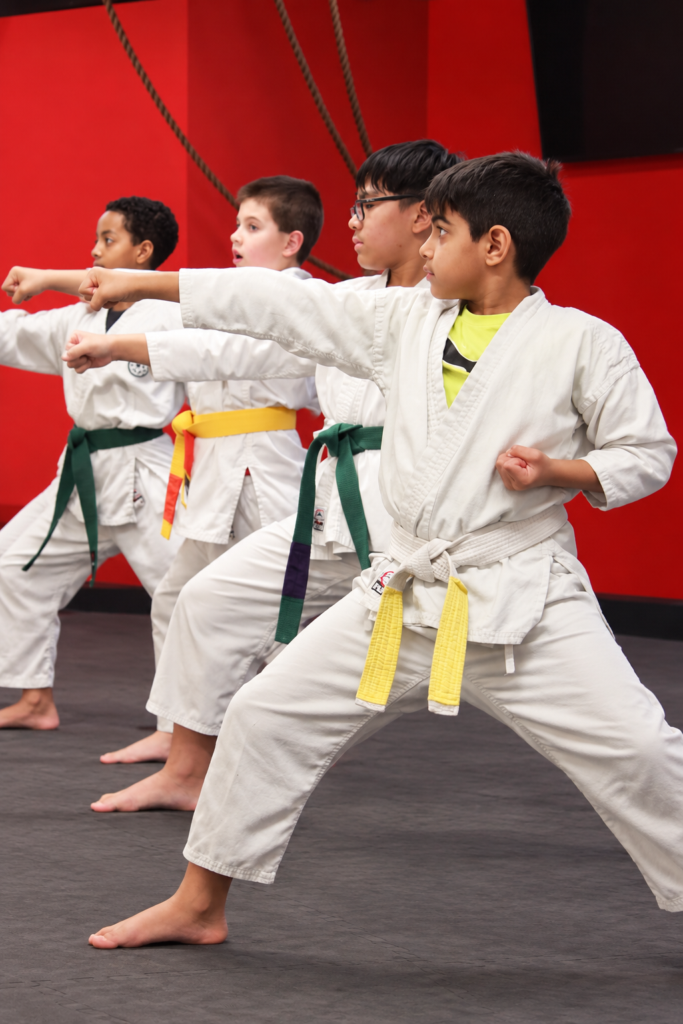
Punches, kicks and blocks, takedowns, and how to get free from grabs and holds. Your child also learns what to do about bullying, online and in person, and how to manage screen time.
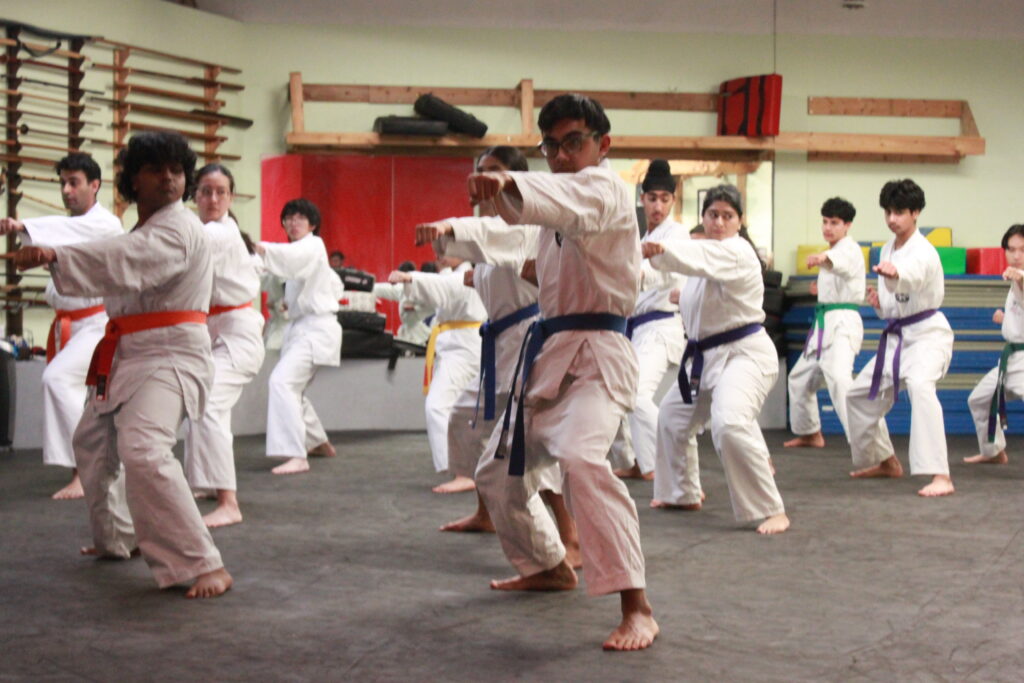
Teens, 13–17
Takedowns and throws, and how to get free from grabs, holds and headlocks, in your own class. You also learn how to deal with cyberbullying and protect your identity online.
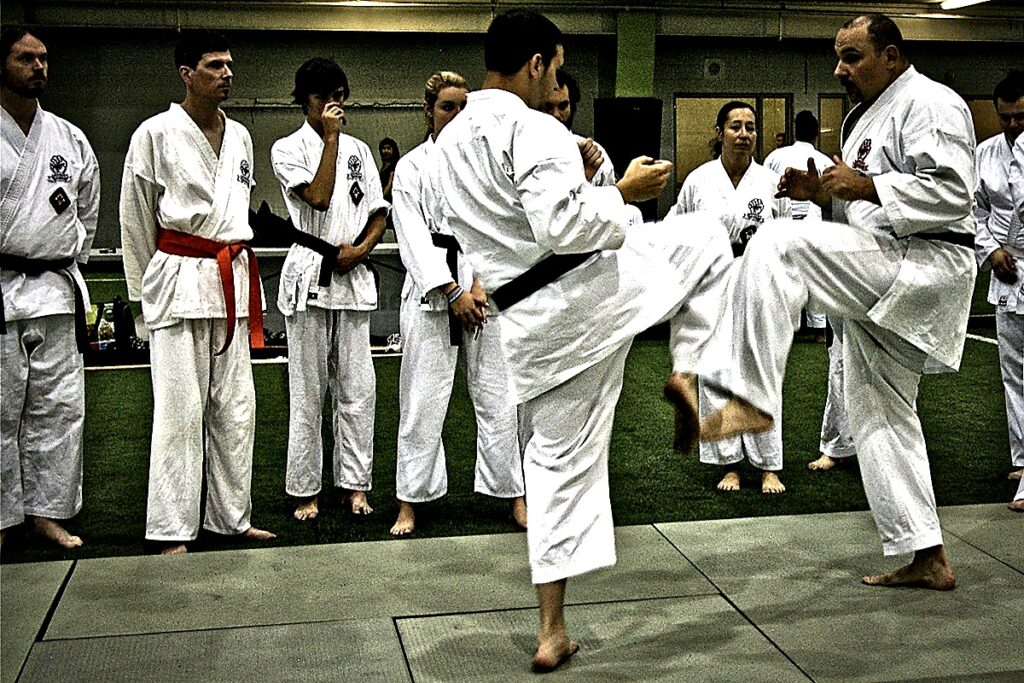
Adults, 18 and up
At each level you set goals, and think through questions such as why protecting your attention matters, and the many ways you “fight” outside the dojo: what are you fighting for, and for whom?
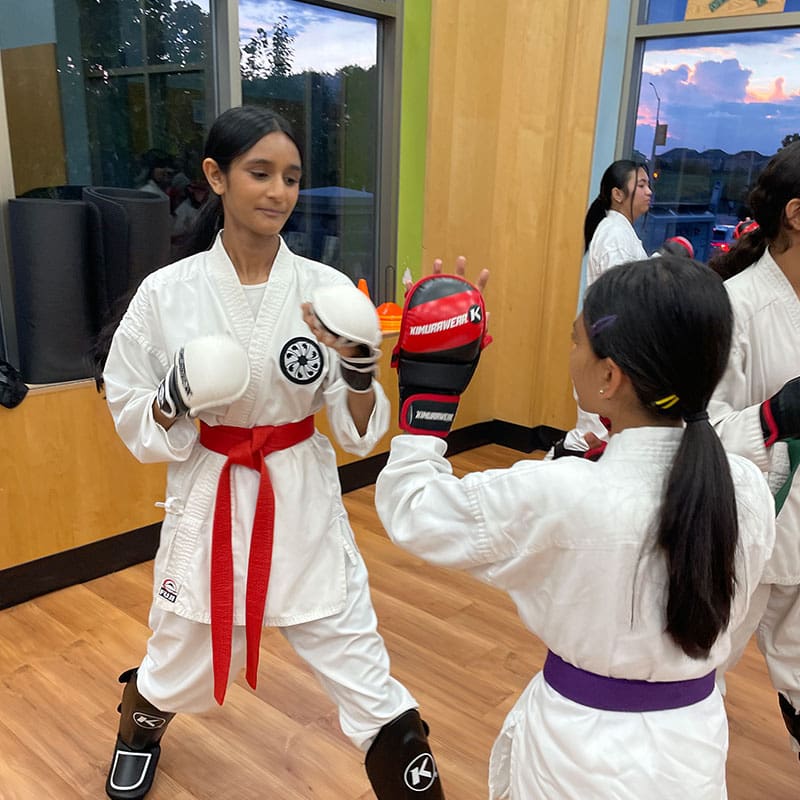
Women’s martial arts class
If you prefer a women-only class, the women’s martial arts class is a karate class for women and for girls 13 and up, every Saturday from 12:00 to 1:30pm.
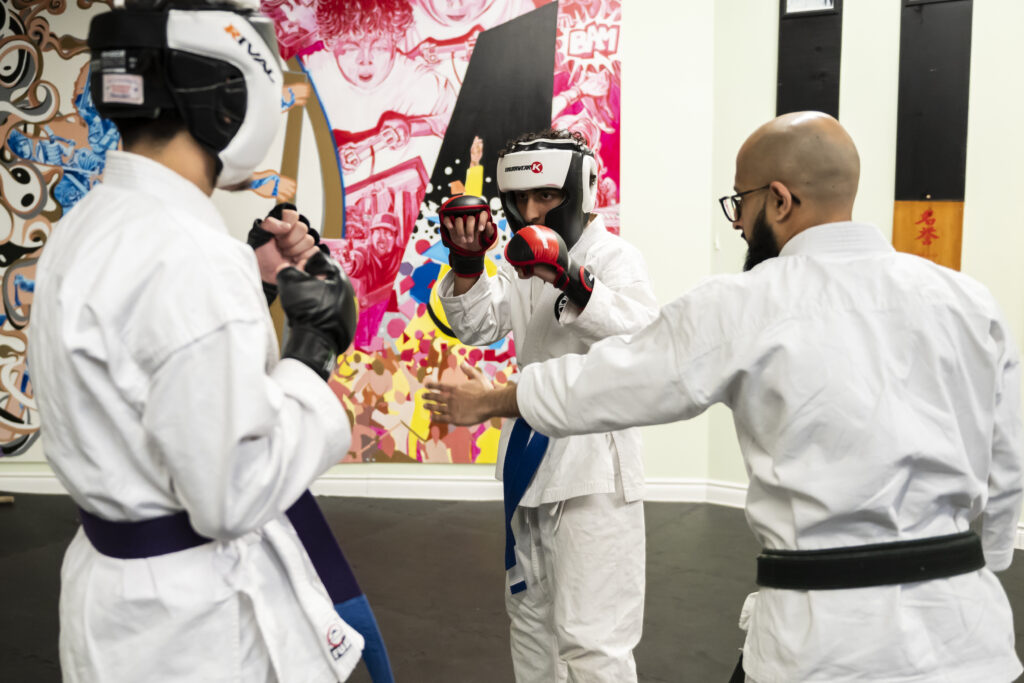
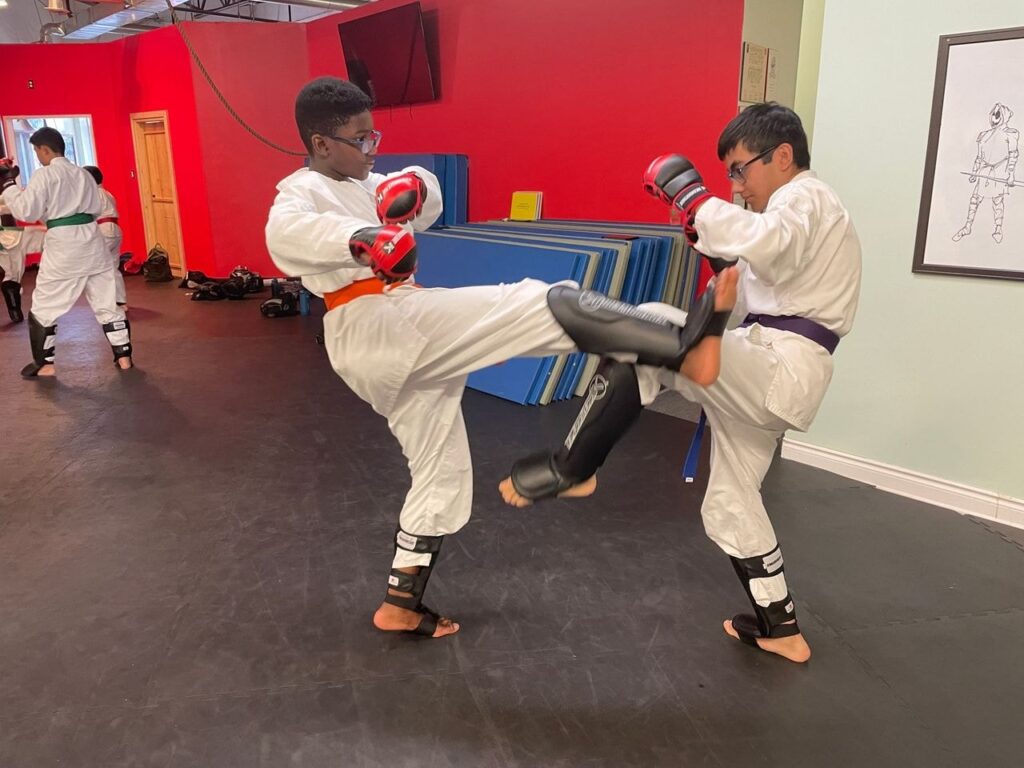
Kickboxing and sparring
Open to you from yellow belt in Karate-do, and part of training from red belt: power, timing and control against a moving partner, with full protective gear for sparring.
From a Google review
One of the best and traditional Dojo I have ever seen. Here sensei and sempai are more focused on practical way of self defense, discipline through their teaching, instead of simply sports karate.
–Hafeez M
Google review
Questions
Click or tap a question to see the answer.
Do I need experience, or to be fit?
No. Most people start with no experience, and you don’t need to be athletic to begin. Your trial class will show you where you are. Training builds fitness, but it is not a weight-loss program.
Is karate safe? Is there contact?
Safety is built into how we teach. Contact starts in the first class, at the level you can handle, and builds up from there. Partners are matched by height and weight, and senior students give beginners room. Sparring comes later at a higher belt level, with full protective gear.
What do I need to bring?
For the trial, loose, comfortable clothes. The uniform comes later, once you enrol.
Can parents watch?
Yes, the first class, which is the free trial. Parents of 4 to 7 year olds usually stay and watch it. After that, gradings are where parents see their child’s progress.
What does it cost?
Email, call or text us and we will go through the fees with you.
Start with a free trial class
Your first step is a free trial class. Before class, you complete our student application and waiver, which also tells us your training goals. For students under 18, a parent or guardian completes it. An instructor or senior student teaches you the basics one to one, and you also train alongside the rest of the class, so you leave knowing what it is like to be a student here.
Questions first? Email admin@dapomartialarts.com, call 905-817-0453 or text 647-424-4180, or send us a message from the Contact & Hours page.