
Teens Self-Defence Classes in Mississauga, Ages 13–17
Your first class is free, and a parent or guardian is welcome to stay and watch it.
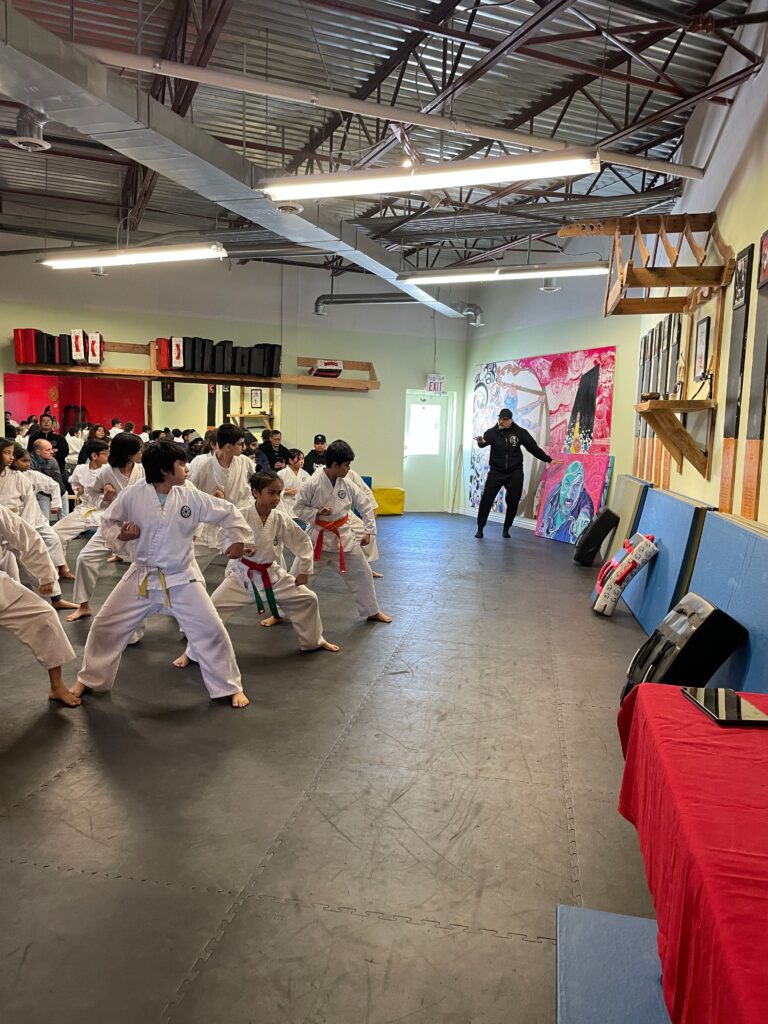
Self-defence is taught in every teen class here, for ages 13 to 17. Most start with Karate-do: empty-handed and standing up, the way most people picture self-defence.
You learn to get free from grabs, headlocks and pushes, to get away from danger, and to speak up for yourself, with self-defence for the situations you meet at school, when you travel and online.
Teens self-defence at a glance
- Ages: 13 to 17, about grade 8 to grade 12, in your own class
- Programs: Karate-do (Goju Ryu style) or Brazilian Jiu-Jitsu, or both, with kickboxing and sparring added once you train in Karate-do, and Arnis/Kali for older teens, plus the women’s martial arts class for teen girls
- Class length: 60 minutes; Brazilian Jiu-Jitsu and the women’s martial arts class, 90 minutes
- How often: plan on two classes a week (see the class schedule)
- Start: any time; no required start date
- Where: 8-1010 Dream Crest Rd, Mississauga
On the schedule, the teens class is called the Youth class.
Self-defence in every art
Each art teaches self-defence its own way.
Karate-do
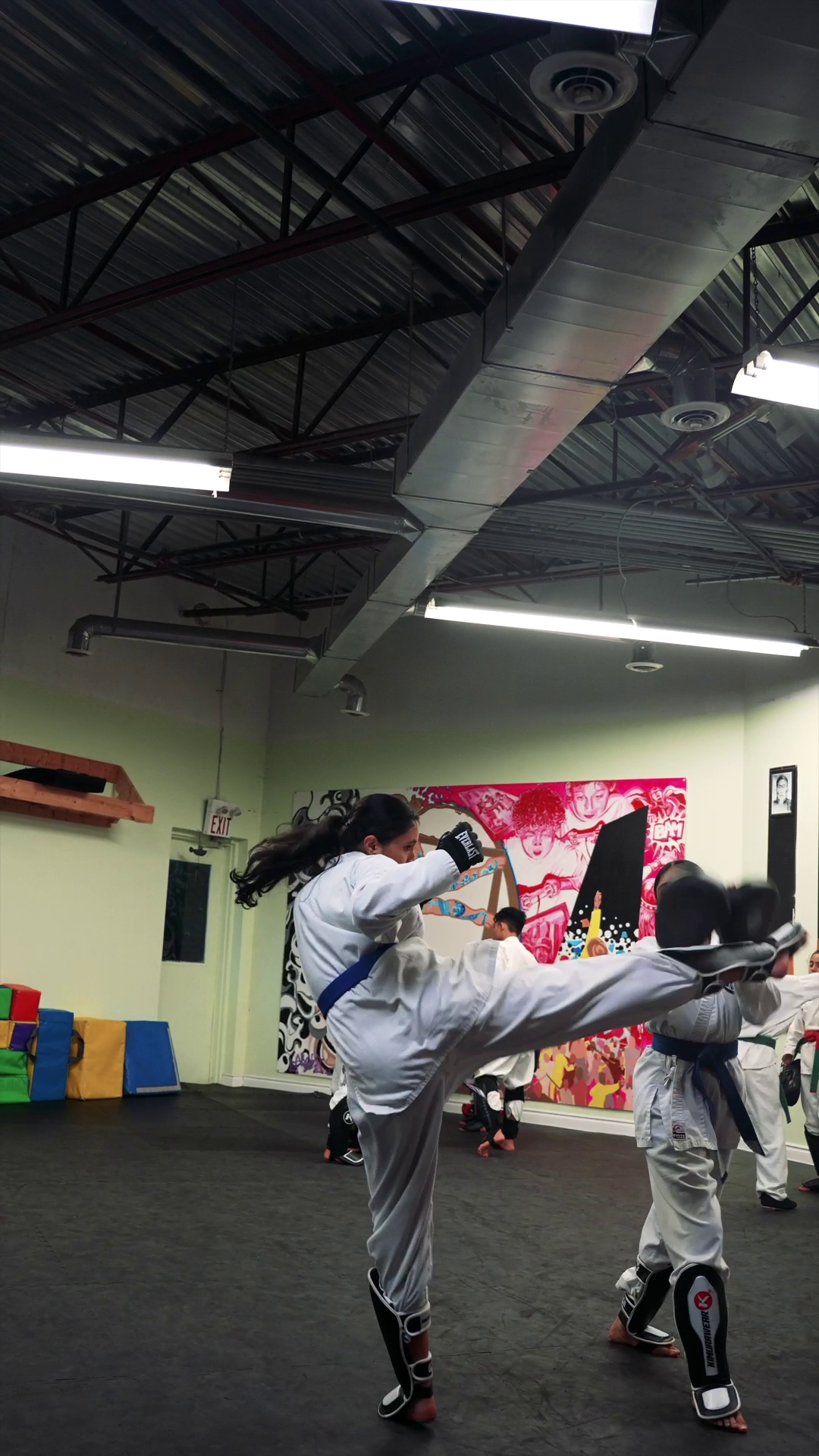
Self-defence standing up, at every range (long, medium, short and in close): punches, kicks and blocks, takedowns and throws, and how to get free from grabs, holds and headlocks. You also learn how to deal with cyberbullying and protect your identity online.
Brazilian Jiu-Jitsu
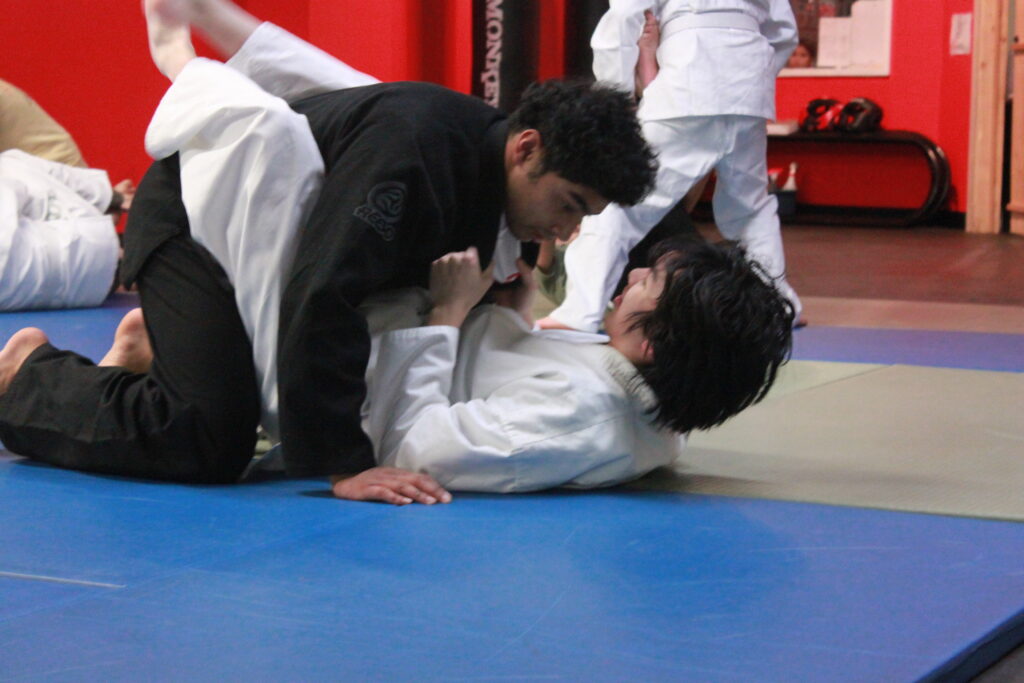
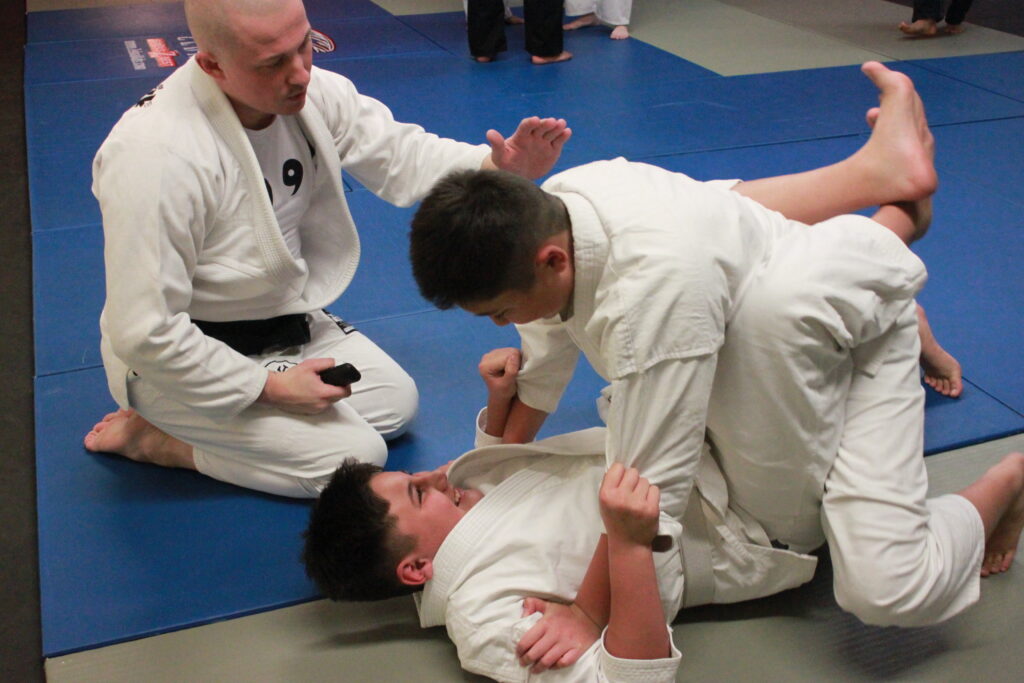
Close-contact grappling, where you learn takedowns and sweeps and to stay calm and in control on the ground.
Kickboxing and sparring
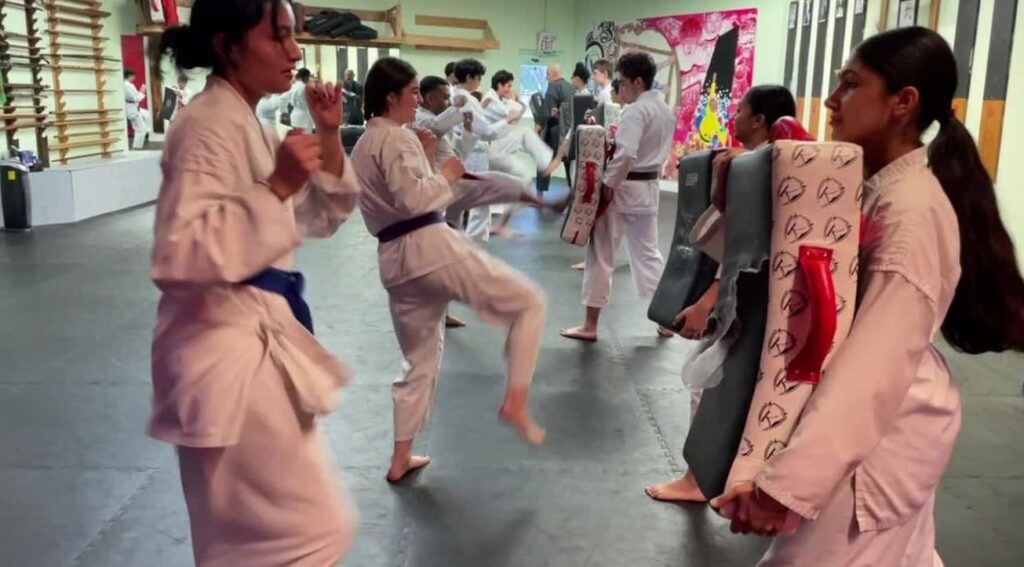
Facing a partner who is attacking you, you learn to manage fear and anxiety, think of your next step and carry it out under pressure. You join from yellow belt in Karate-do.
Arnis/Kali
Filipino weapons-based self-defence: you train with stick and blade, and learn to disarm both. Arnis/Kali is for older teens and adults, and a younger teen may join after an assessment class.
What self-defence means here
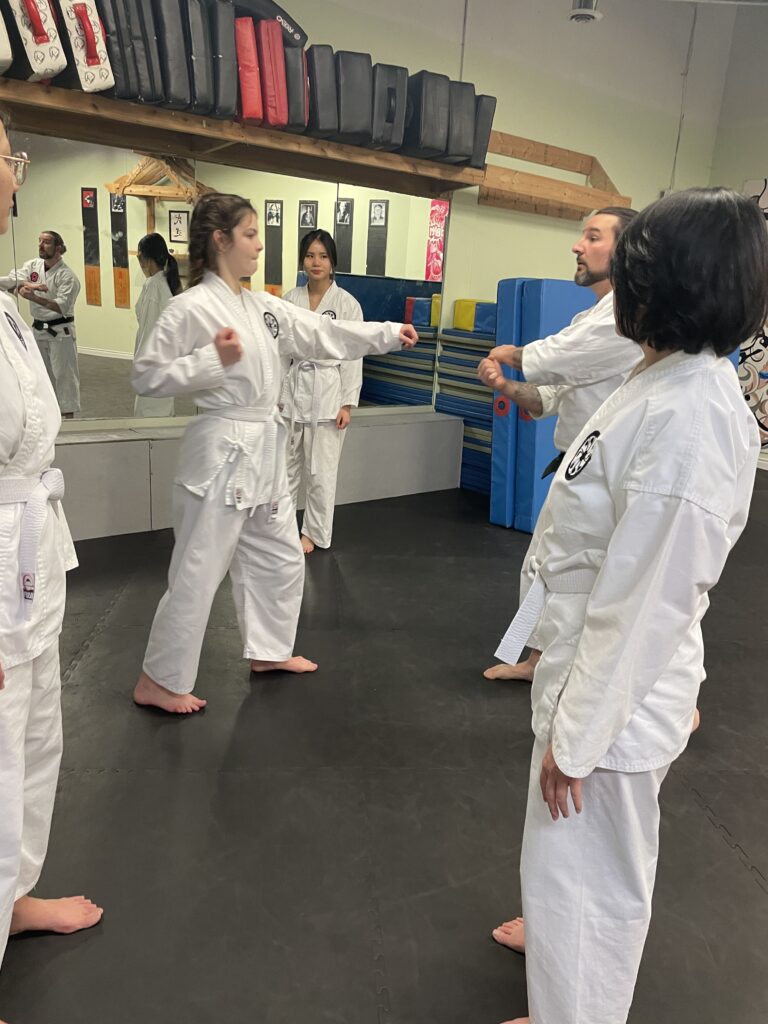
“The best self-defence is no self-defence.” We teach all students that physical fighting is the last resort. Using your words, courtesy, respect, patience, tolerance, consideration, and kindness stop a fight before it even begins, which is the goal for everyone.
When you do have to defend yourself, self-defence here means getting out of danger and getting away, not staying to win a fight. It covers the situations you meet at school, when you travel and online.
Are you worth defending?
Believe you are worth defending
We ask every student: are you worth defending? Believing you are comes first, then the action to back it up.
Read body language
We also teach how to read body language and what your own body language projects; the importance of posture and how you carry yourself.
Say what you mean
Say what you mean, and mean what you say: a firm voice, confident posture, direct eye contact that carry your intent across.
Use your voice
We address the use of voice in many forms: from speaking up for yourself, especially against someone you know, up to using a louder voice to protect yourself and get attention for help.
Find the courage to say no
You build the courage to speak up for yourself, from “I’m not comfortable with that” to someone you know, to a convincing “NO” to someone who is manipulating you into trading something you have for something they want.
What you practise
You practise escapes from grabs, headlocks and pushes, what to do when more than one person comes at you, and how to get help or help someone else.
Skills include strikes, counters, holds, controls, takedowns, individual and partner patterns, and submissions.
Contact, built up step by step
Contact starts in the first class, at the level you can handle, and builds up from there: distance and timing, your own body and voice, technique with a partner, then a partner who resists, and then one who moves unpredictably.
You train with your own age group, partners are matched by height and weight, and instructors stop or adjust a pair whenever they need to. Sparring comes later at a higher belt level, with full protective gear.
Self-defence for teen girls
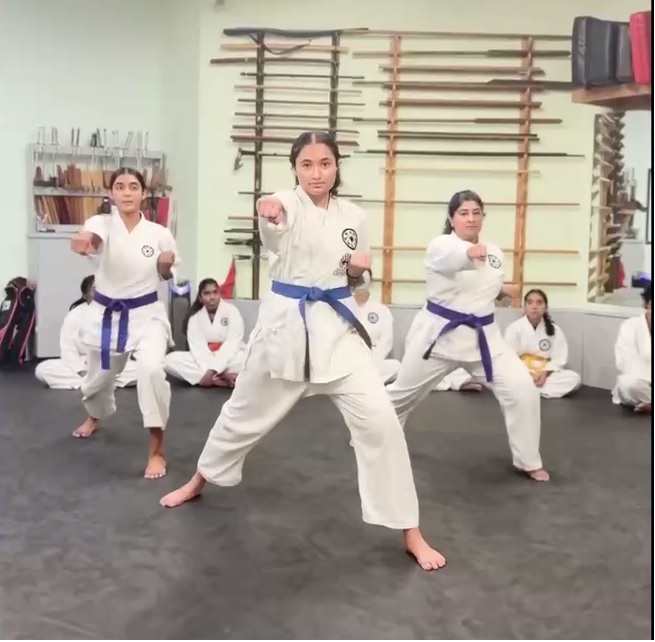
If you prefer a women-only class, girls 13 and up can join the women’s martial arts class, a karate class every Saturday from 12:00 to 1:30pm. Every class is taught by a female instructor.
For a teen’s trial class, a parent signs the waiver, and a mother or female guardian may watch it. You can also train in any of our co-ed teen classes.
Self-defence at your school
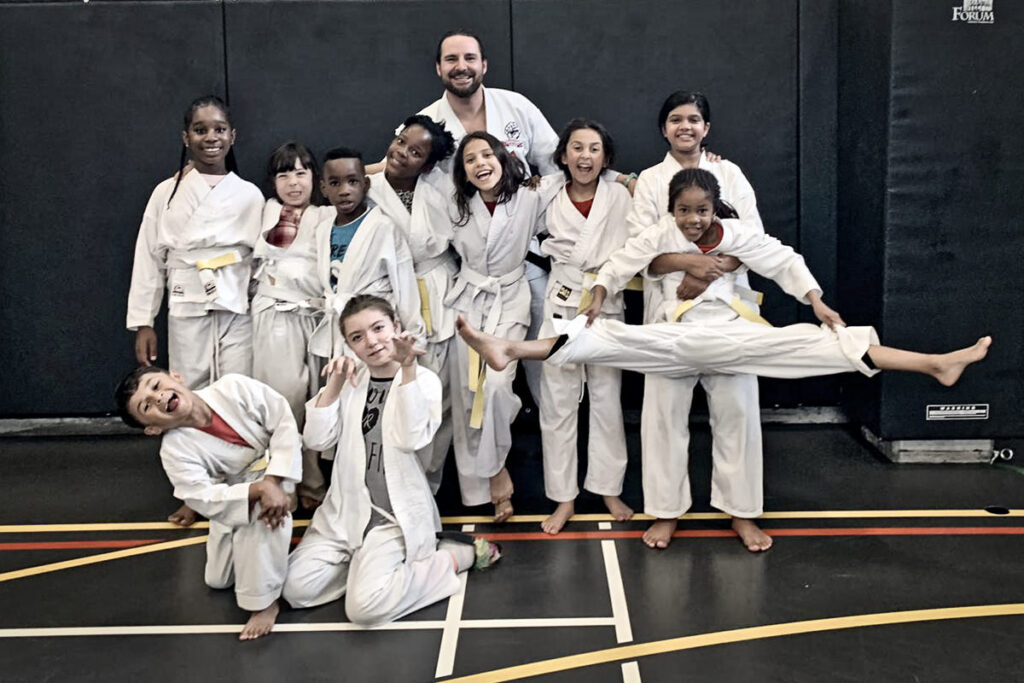
We also teach self-defence in schools, public and private, up to Grade 12, in English or French, from a single workshop to a weekly program, with girls-only or boys-only groups if a school prefers.
If you would like your school to offer one, ask a parent to raise it at a school council or parent meeting, or ask your principal, and point them to our School Programs page.
From a Google review
Brought my son for a trial session and was impressed with the Karate instructor. Now I am regularly bring my kid here to learn self defence. Very professional instructor.
–Rock N
Google review
Questions teens and parents ask
Click or tap a question to see the answer.
Do I need experience?
No. Most teens start here with no experience, and that is what classes are built for.
Will self-defence make me aggressive?
No. Self-defence here means getting away from danger, not staying to win a fight. Training is about overcoming yourself, so if you have a lot of energy you learn to control it, and if you are shy you learn to stand up for yourself.
What do I need to bring?
For the trial, loose, comfortable clothes. The uniform comes later, once you enrol.
Is there self-defence for kids and adults?
Yes, in their own classes. See Kids Self-Defence, ages 4–12 and Adult Self-Defence, 18 and up.
What does it cost?
Email, call or text us and we will go through the fees with you.
Start with a free trial class
Your first step is a free trial class. Before class, your parent or guardian completes our student application and waiver, which also tells us what you would like to get from training. An instructor or senior student teaches you the basics one to one, and you also train alongside the rest of the class, so you leave knowing what it is like to be a student here.
Questions first? Email admin@dapomartialarts.com, call 905-817-0453 or text 647-424-4180, or send us a message from the Contact & Hours page.