
Kickboxing and Sparring Classes in Mississauga
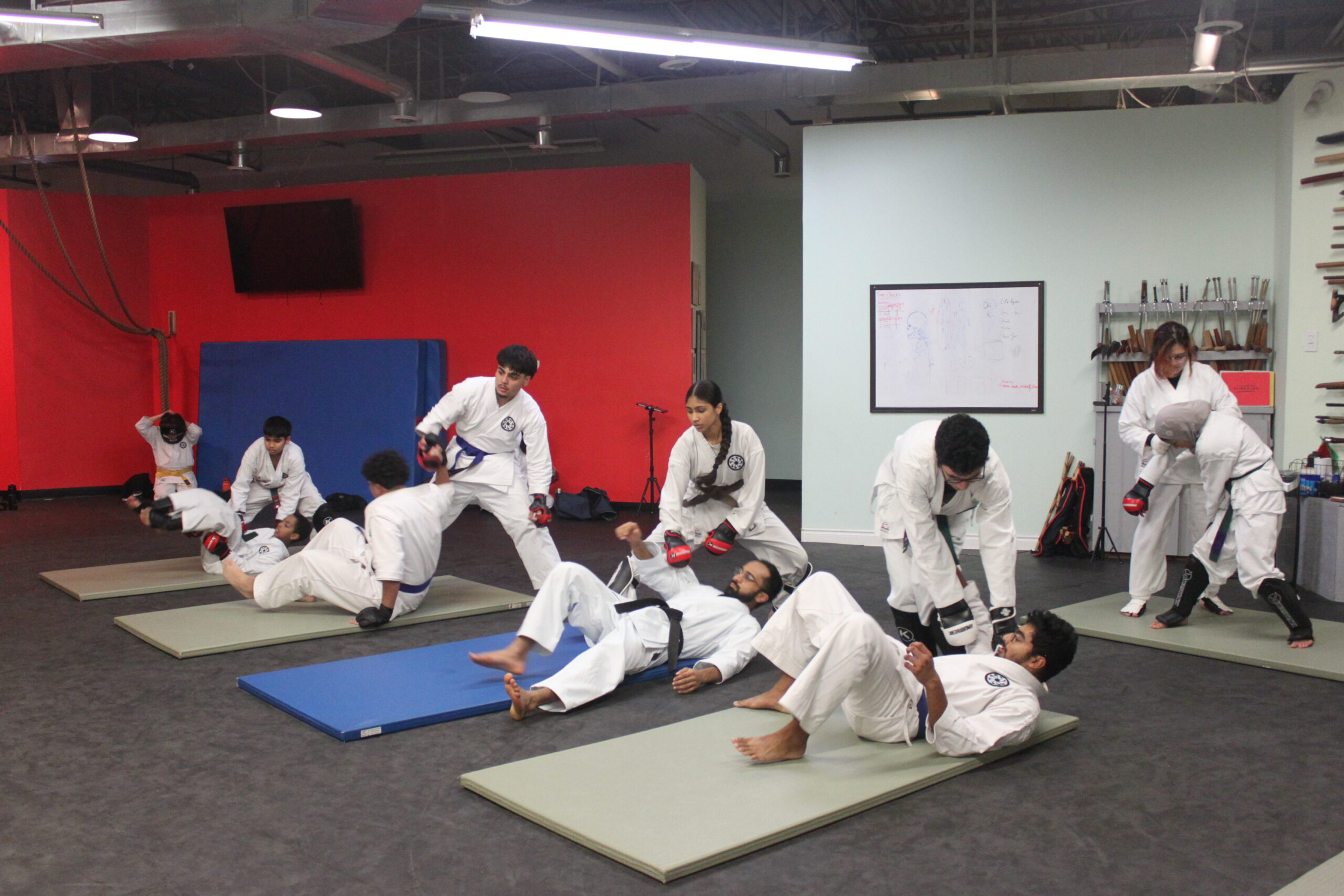
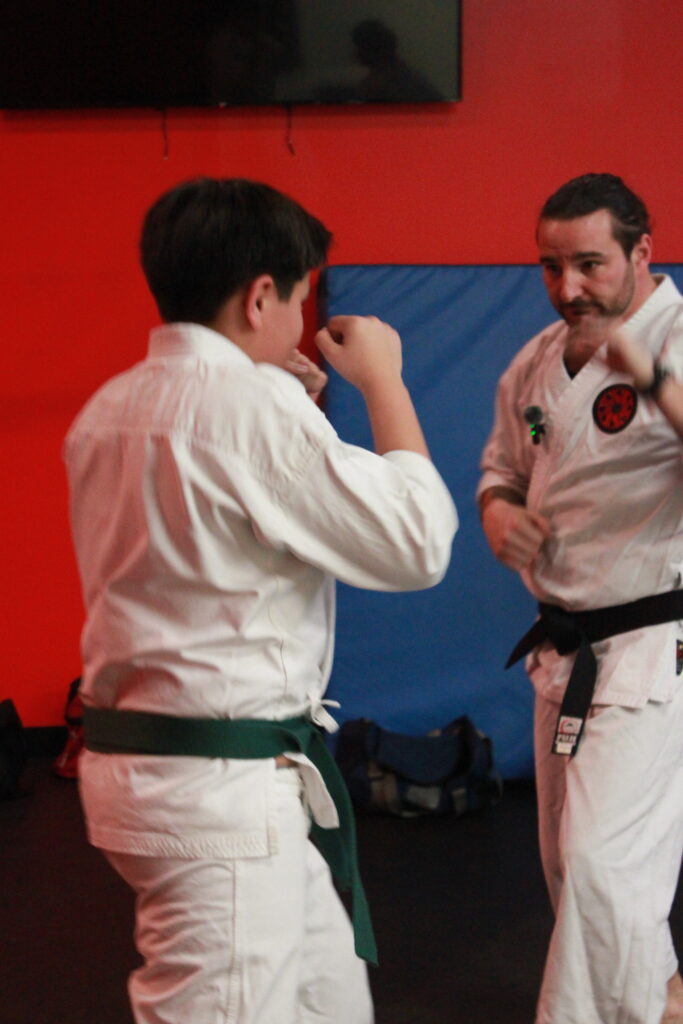
Kickboxing builds on a solid foundation of skills. Here you learn advanced striking, evasion, footwork, takedowns, locks and combinations.
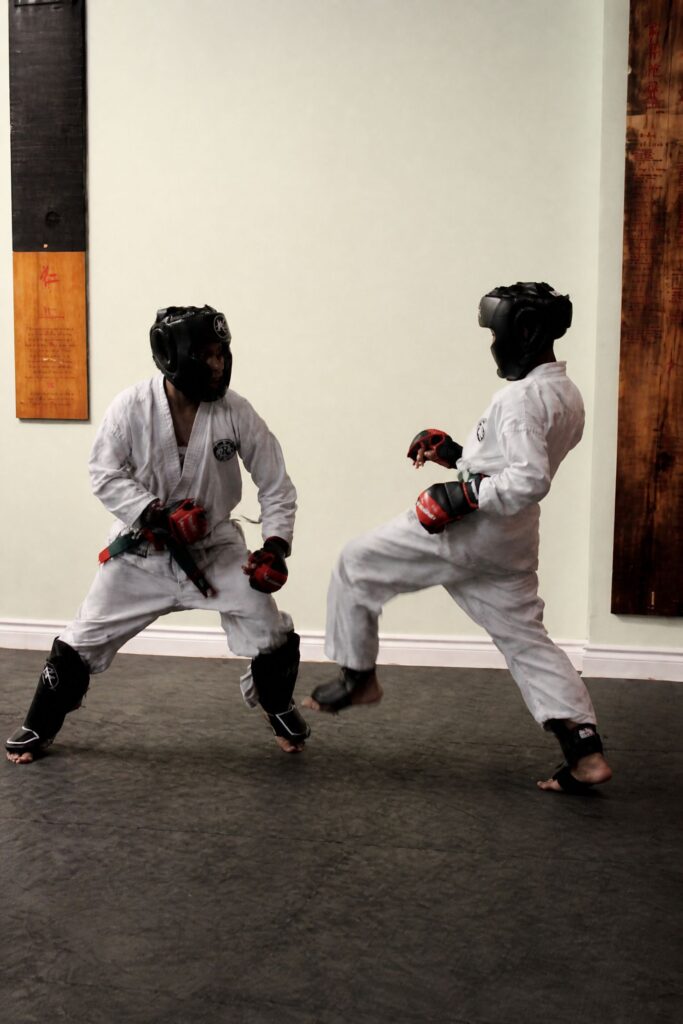
Then you put them to work in sparring. Facing a partner who is attacking you, you learn to manage fear and anxiety, think of your next step and carry it out under pressure. That is self-defence.
Kickboxing at a glance
- Ages: adults 18 and up
- Who joins: students training in Karate-do, from yellow belt; part of training from red belt
- New to Dapo with experience: assessed in a free Karate-do trial class
- Class length: 45 to 60 minutes
- How often: one or two kickboxing classes a week, on top of two Karate-do classes a week (see the class schedule)
- What to wear: your gi, with full protective gear and a mouthguard for sparring
- Start: any time; no required start date
- Where: 8-1010 Dream Crest Rd, Mississauga
What you train
Pads and mitts
Punches, kicks and combinations with power behind them, and how to hold pads well so your partner can train hard too.
Entering and evading
Footwork and movement to know when to close the distance and when to pull out again, and how to move your body, feet and hands off the line of an attack (sabaki).
Combinations
Multi-step striking combinations with takedowns and controls to finish.
Sparring drills, then free sparring
Drills set the technique against a partner. Free sparring tests it against a partner who moves and resists.
Conditioning
Most classes build in fitness conditioning, so your strength and stamina grow with your technique.
Safety and etiquette
How to spar safely, train clean and treat your partner with respect, before anything else.
What sparring teaches you
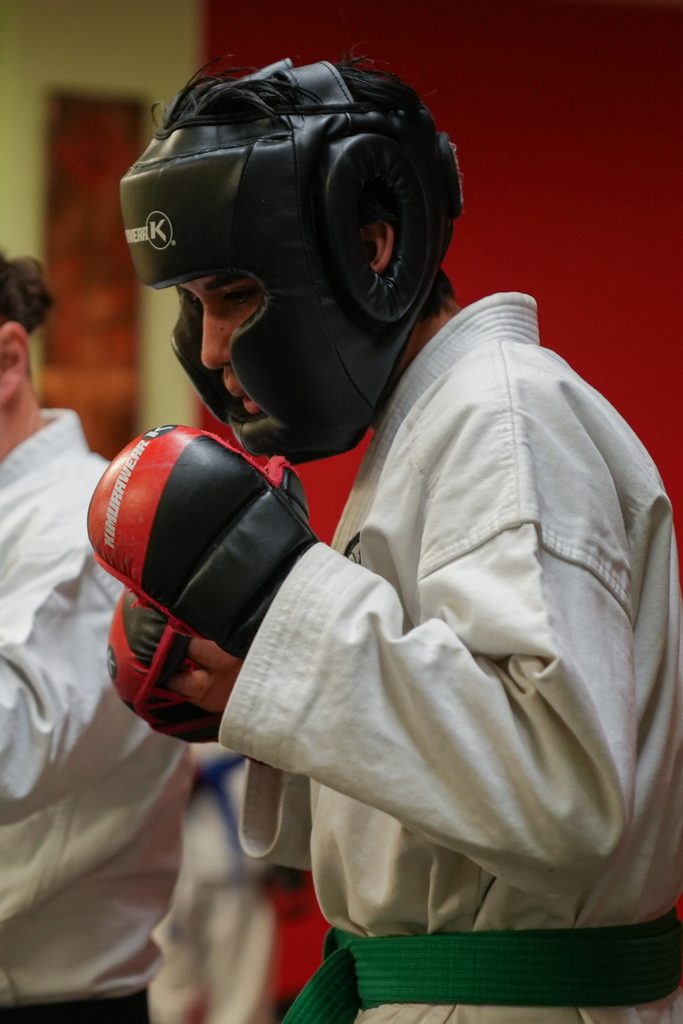
Sparring is unpredictable and nerve-wracking, and you learn to be comfortable with that discomfort. You make mistakes, accept them and keep going rather than quit. We ask every student: are you worth defending? Believing you are comes first; sparring is where you build the action to back it up.
Sparring is full contact, so physical resilience builds as you train. The more comfortable you get with contact, the better you will handle it if you ever have to use your skills outside the dojo. You get fitter along the way too.
How you start
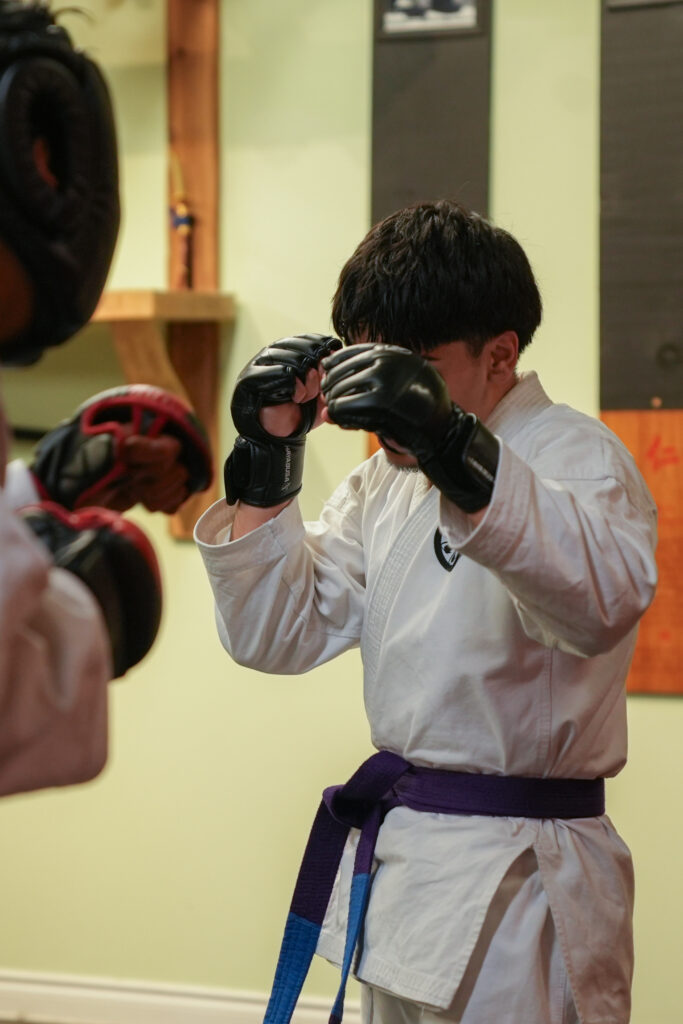
You begin in Karate-do, where you learn the stances, punches, kicks and blocks you bring to kickboxing.
If you have trained before, in kickboxing or any other martial art, you are assessed in a free Karate-do trial class, and the instructor tells you where you fit. Some students with experience in other styles have joined sparring straight away.
Contact, built up step by step
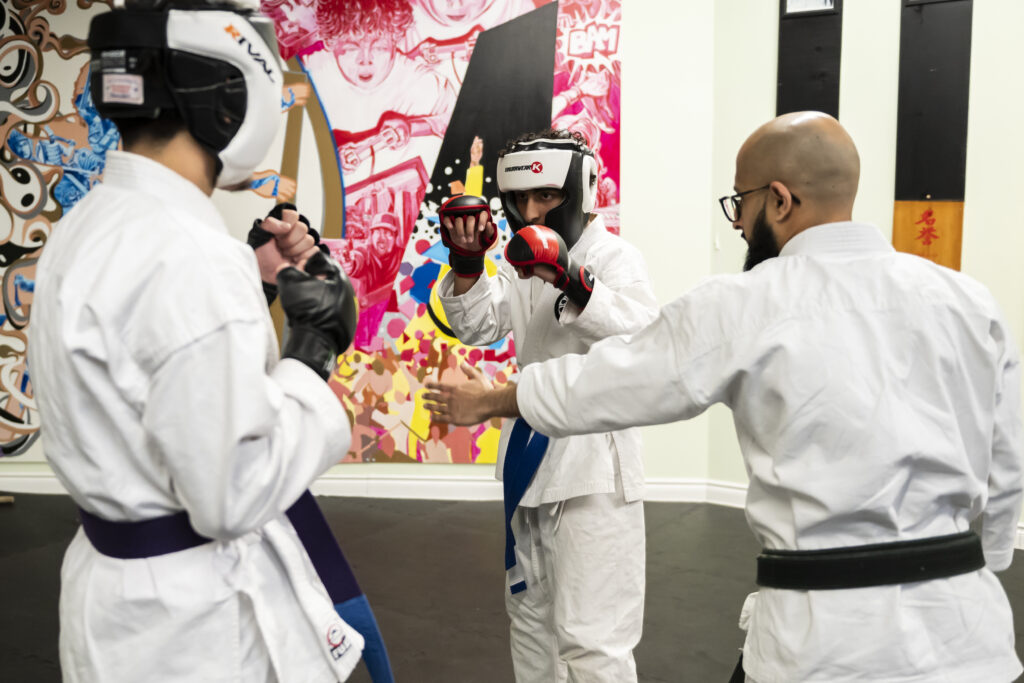
Students must be comfortable with basic contact by the time they join sparring class. Partners are matched by height and weight, senior students give beginners more room, and instructors stop a pair and adjust when needed.
Kickboxing for kids, ages 8–12
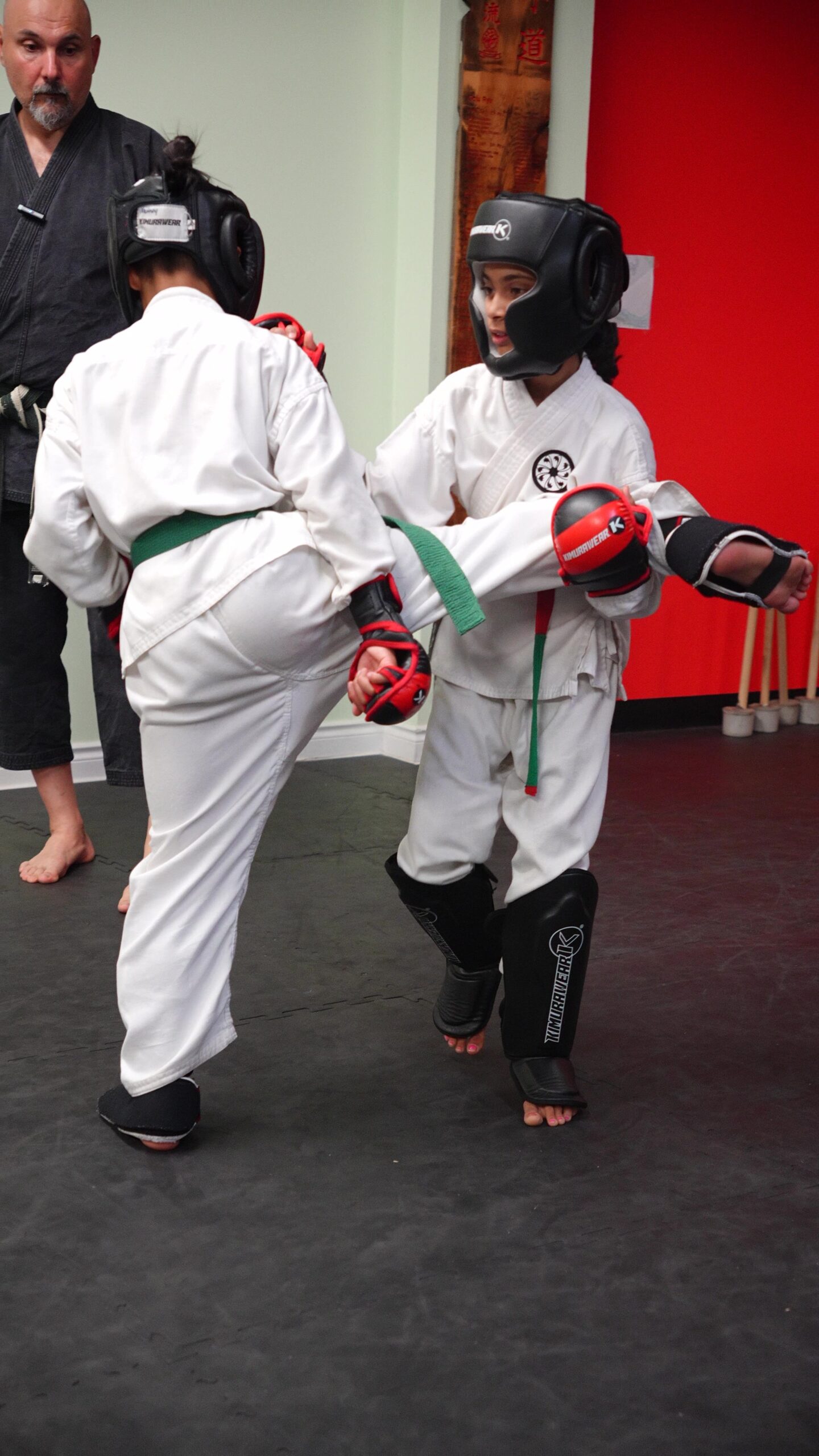
Your child starts in Karate-do, can add kickboxing from yellow belt, and trains in it from red belt. Your child spars in their gi and will need a mouthguard, head gear and the rest of the protective gear.
Kickboxing for teens, ages 13–17
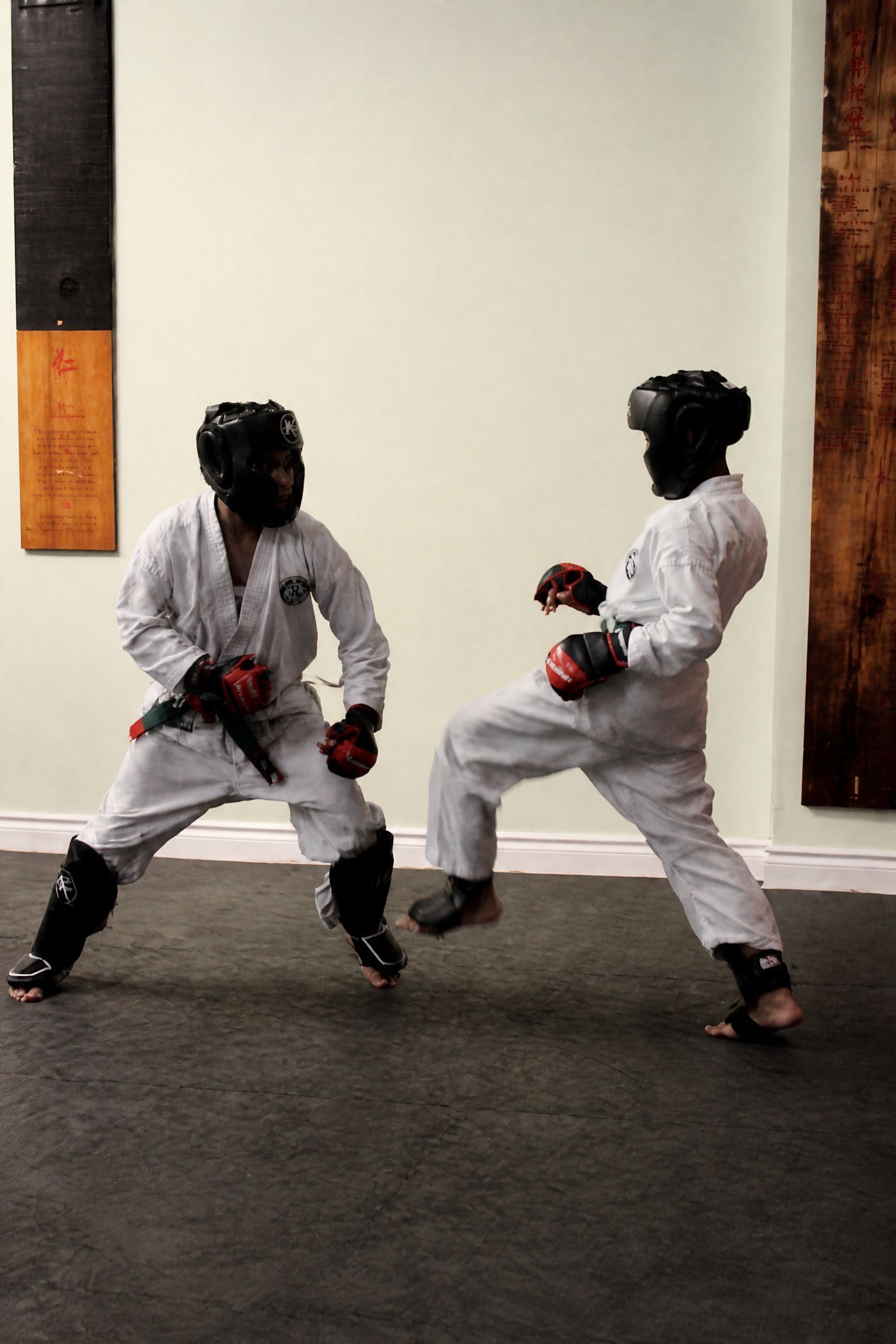
You start in Karate-do, can add kickboxing from yellow belt, and train in it from red belt. If you are new to Dapo and have martial arts experience, you are assessed in a free Karate-do trial class.
Questions
Click or tap a question to see the answer.
What gear is required?
You train in your gi. Sparring adds full protective gear: a mouthguard, head gear, hybrid gloves, shin guards and groin protection, plus chest protection for women. You can buy your gear through the dojo, and if you are buying elsewhere, check with us first. Bring a water bottle too.
Will sparring make me aggressive?
No. Self-defence here means getting out of a situation and going, not staying to win. Physical fighting is the last resort (“the best self-defence is no self-defence”), and you learn to stop a fight with words before it starts. Training is about overcoming yourself: students with too much aggression learn to temper it, and quieter students learn to stand their ground.
I have trained in kickboxing elsewhere. Can I join?
Yes, after an assessment in a free Karate-do trial class. Experience in any martial art counts, and some students have joined sparring straight away.
What does it cost?
Email, call or text us and we will go through the fees with you.
Ask us about kickboxing
Your first step is a free Karate-do trial class. Ask us about kickboxing and where you would start: email admin@dapomartialarts.com, call 905-817-0453 or text 647-424-4180, or send us a message from the Contact & Hours page.