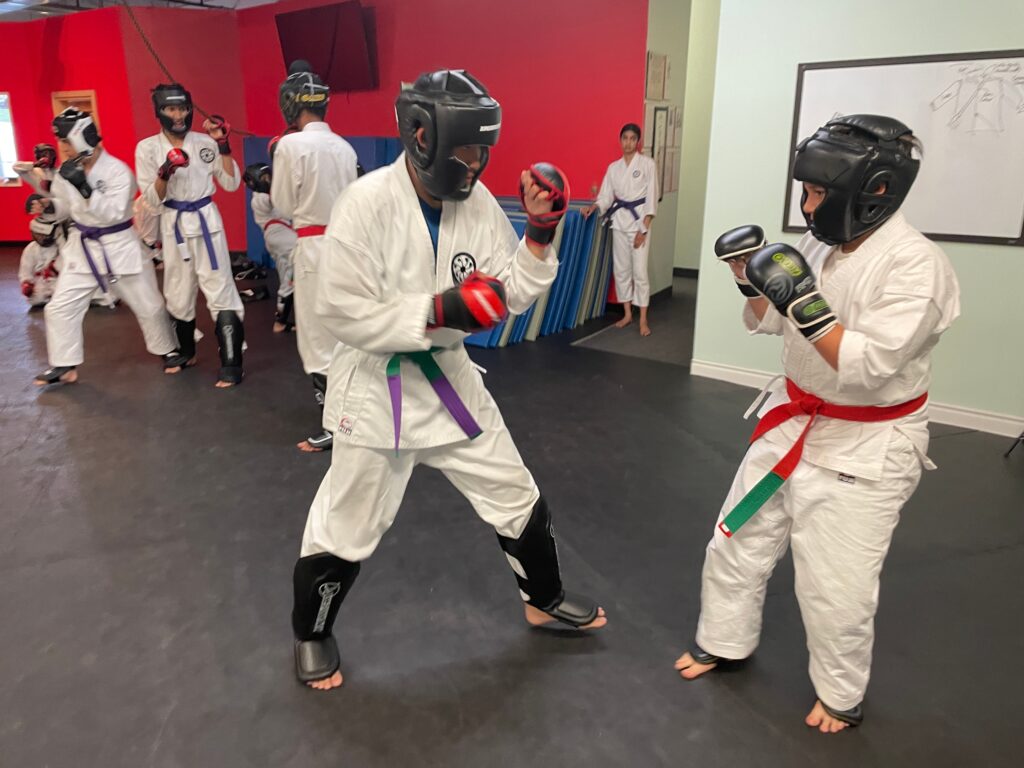
Kids Martial Arts Classes in Mississauga, Ages 8–12
Your child’s first class is free, and you are welcome to stay and watch it.
Your child builds confidence, learns self-defence for the situations they meet at school and online, practises discipline, and stays fit and active.
Along the way, they learn what to do about bullying, how to stay safe, and how to manage their attention and behaviour.
Starting as a beginner
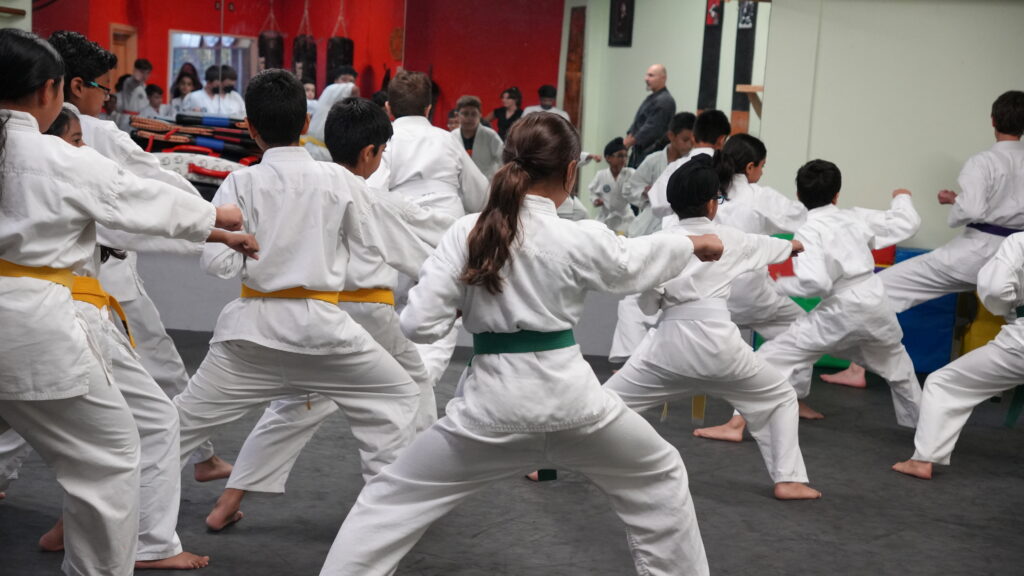
Most children start here with no experience, and that is what classes are built for. Every class mixes whole-group work, partner work and one-on-one time with an instructor, so your child gets attention of their own, not only a place in the group.
Beginners and more experienced children each get work that suits them, and your child learns step by step, never left to work it out alone. New students start all through the month, so your child won’t be the only beginner in the class. Shy kids find their confidence long before any rank.
What your child learns
Confidence
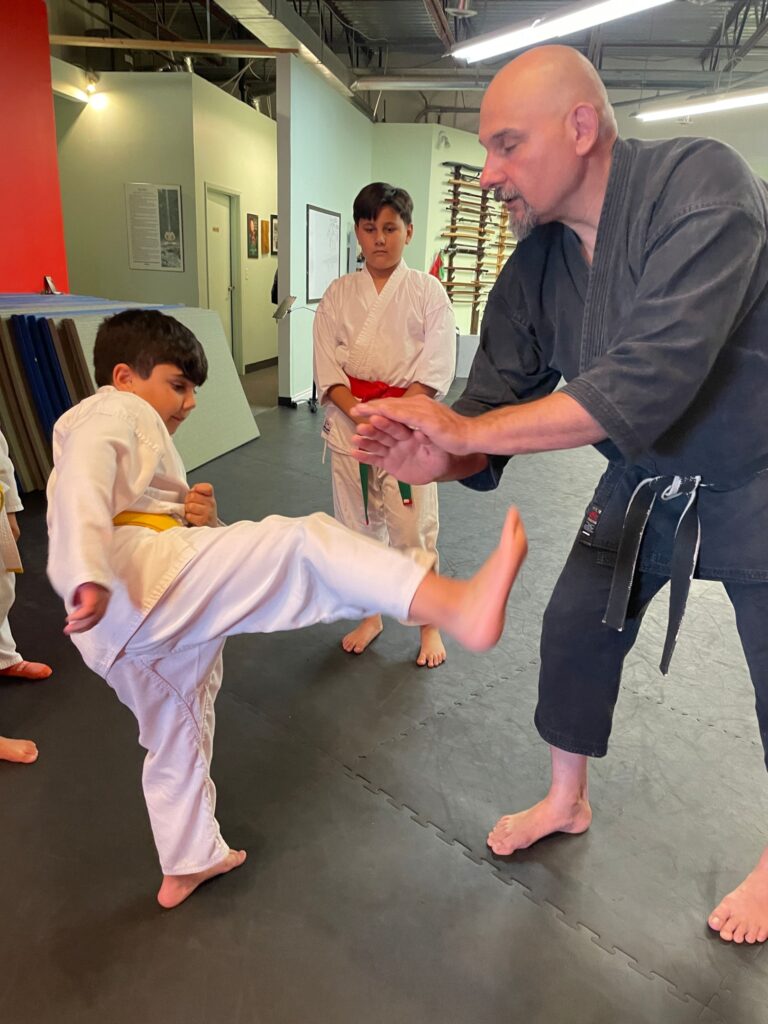
Confidence comes from things your child can do. At each level your child learns a group of skills together, then moves on to new ones while still improving the old, just as at school, where children learn reading, writing and math together and keep building on them every grade. Skills include strikes, counters, holds, controls, takedowns, individual and partner patterns, and submissions. Each rank is earned through consistent training, and the first comes after about three months.
Self-defence for school and beyond
At 8 to 12, self-defence is about the situations your child meets at school and with other children. It means getting away from danger, not staying to win a fight. We work on practical self-defences that apply to real-life situations that your child will encounter at school or in the playground, such as grab escapes and push scenarios. Your child also learns that fighting is the last resort, and builds the courage to say “I’m not comfortable with that” to someone they know, with a firm voice, confident posture and direct eye contact.
Discipline
Your child learns to line up with the class, follow instructions, and work independently. As they progress, they help a newer student, the way senior students once helped them.
Fit and active
Classes build strength, flexibility and balance, with warm-ups and exercises that grow with each level. Some parents tell us they want their child off the couch and off devices, and training is how they do it.
Working with a partner
Most training is done with a partner, so your child learns to work with others and to train safely. Partners help each other improve, so everyone in the class rises together.
Training safely
Contact starts in the first class, at the level your child can handle, and builds up from there: distance and timing, their own body and voice, technique with a partner, and then a partner who resists. Your child trains only with children their own age, partners are matched by height and weight, and instructors stop or adjust a pair whenever they need to. Sparring comes later at a higher belt level, with full protective gear.
Ages 8 to 12 at a glance
- Programs: Karate-do (Goju Ryu style) or Brazilian Jiu-Jitsu, or both, with kickboxing and sparring added once your child trains in Karate-do
- Ages: 8 to 12, about grade 3 to grade 7, in their own class
- Class length: 45–50 minutes
- Class format: in Karate-do, group work, small groups, partner work and individual time; in Brazilian Jiu-Jitsu, warm-ups, techniques and drills with a partner, then rolling with different partners
- How often: plan on two classes a week (see the class schedule)
- Start: any time; no required start date
- Make-up classes: available
- First rank: about three months of consistent training
- Where: 8-1010 Dream Crest Rd, Mississauga
Your child’s free trial class
Book a time that suits you. Before class, you complete our student application and waiver, which also tells us what you would like your child to get from training. Dress your child in loose, comfortable clothes.
An instructor or senior student teaches your child the basics one to one, and your child also trains alongside the rest of the class, so you both leave knowing what it is like to be a student here.
You are welcome to stay and watch the trial, or to run an errand while your child trains. After that, parents don’t watch regular classes: children concentrate better without an audience, the same reason parents don’t sit in at school. A large window into the training hall means you can always see in, and gradings are where you see your child’s progress.
We also encourage you to try a class at other schools, so you can compare, or to try a free class yourself and feel what martial arts training is like.
From a parent’s Google review
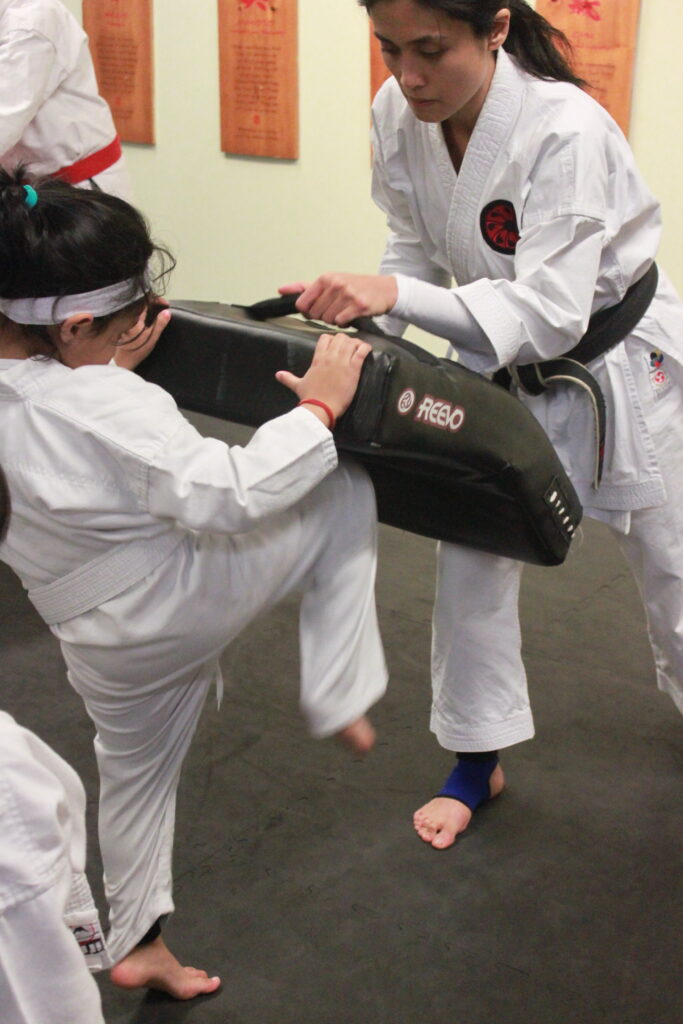
The environment has always been welcoming, supportive, and well-organized. A very special thank you to Sensei Harris, his dedication, patience, and encouragement have made such a positive impact on our daughter. He has not only developed her karate skills but also gained confidence and discipline under his guidance.
–NaZ D
Google review
Questions parents ask
Click or tap a question to see the answer.
Is martial arts safe for my child?
Yes. Contact builds up gradually from what your child can handle, children train only with their own age group, and partners are matched by height and weight. Sparring needs full protective gear.
Will martial arts make my child aggressive?
No. Self-defence here means getting away from danger, not staying to win a fight. Training is about overcoming yourself, so a child with a lot of energy learns to control it, and a shy child learns to stand up for themselves.
What does my child need to bring?
For the trial, loose, comfortable clothes. The uniform comes later, once your child enrols.
Choose how to begin
There is no wrong first step. Your child can start in karate or Brazilian Jiu-Jitsu, or train in both, and both teach everything above. Kickboxing and sparring come later, once your child trains in karate. What matters most is starting, coming consistently and showing up. Here is what each one adds.
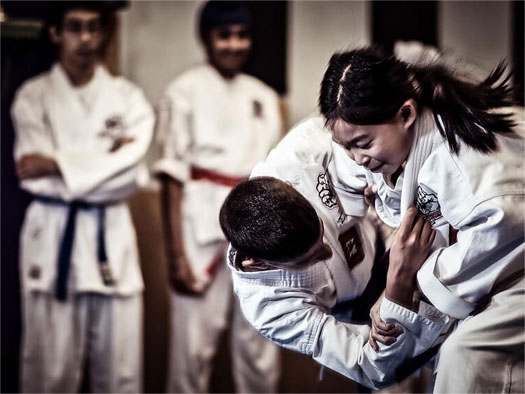
Karate-do
Self-defence standing up, at every range, from long range to in close: punches, kicks and blocks, takedowns, and how to get free from grabs and holds, with patterns (kata) that grow at each level. Your child also learns what to do about bullying, online and in person, and how to manage screen time.
Stories and conversations
Short stories about words like honesty, jealousy and compassion, with open class conversations, help your child think about how they treat others.
The same values in class and at home
With our Parent Report Sheet, you mark your child on things like homework, tidying their room, managing screen time and how they treat family and elders, so class and home teach the same values.
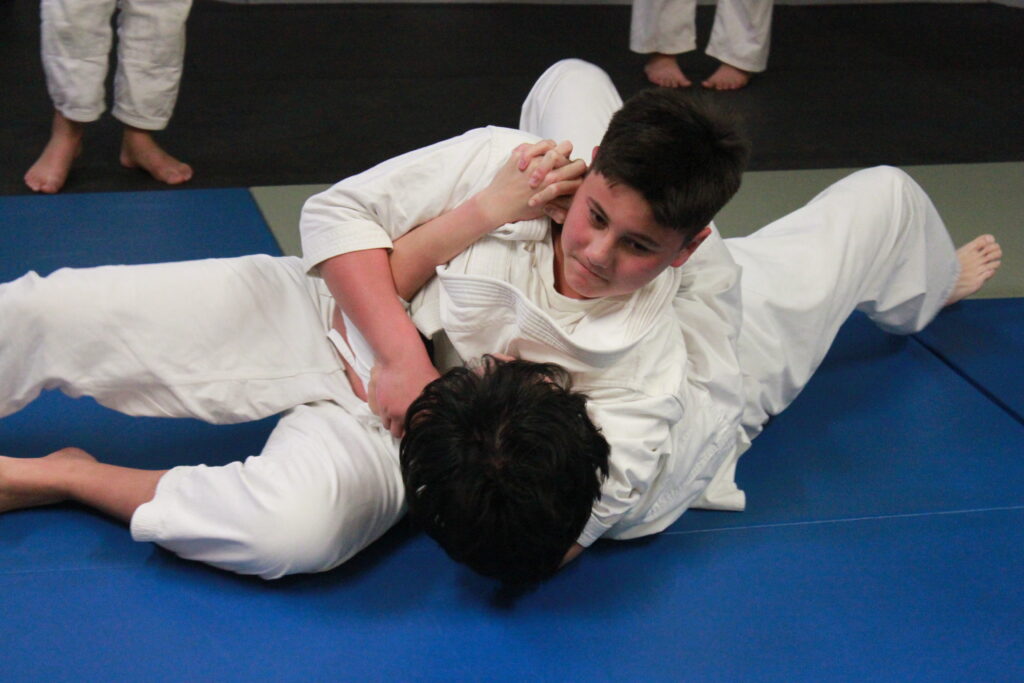
Brazilian Jiu-Jitsu
Close-contact grappling, where your child learns takedowns and sweeps and to stay calm and in control on the ground. Children earn stripes through regular evaluations, which you can watch. Competing is optional but highly encouraged in this program. We recommend a handful of the best tournaments in the GTA, ones that give your child a wholesome experience of growth.
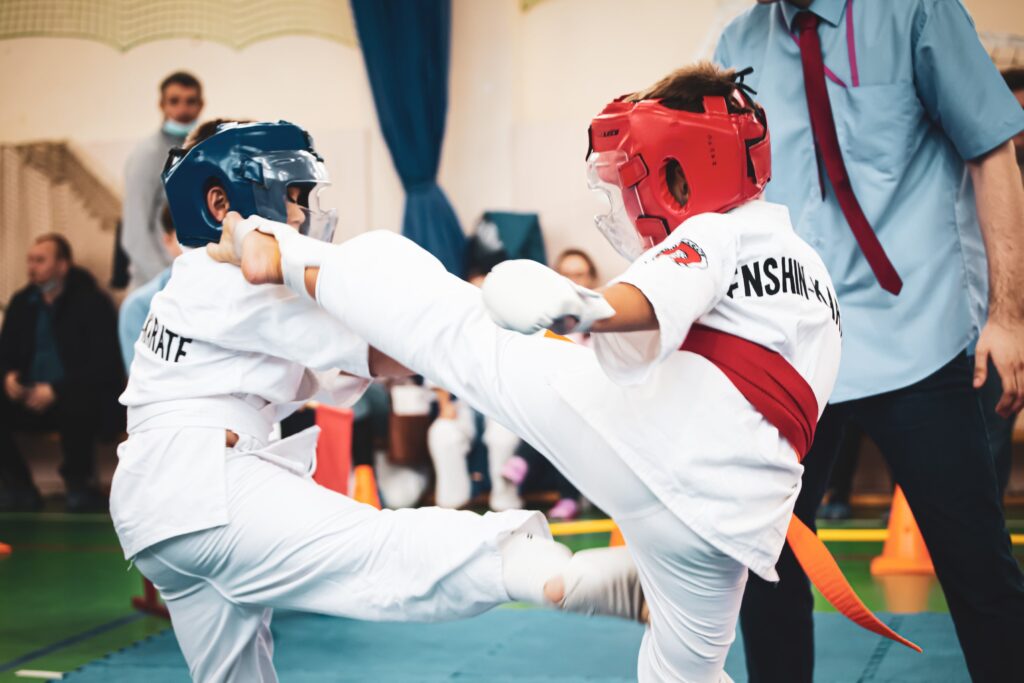
Kickboxing and sparring
Open to your child from yellow belt in Karate-do, and part of training from red belt: power, timing and control against a moving partner, in its own class for ages 8 to 12, with full protective gear for sparring. A child new to Dapo who has martial arts experience and wants to join kickboxing and sparring is assessed in a free Karate-do trial class.
After age 12
At 13, children move up to the teens class, for ages 13 to 17. Teens train in Karate-do, Brazilian Jiu-Jitsu, kickboxing and sparring, and Arnis/Kali, and find a discipline that carries into their schoolwork. Teen martial arts, ages 13 to 17